
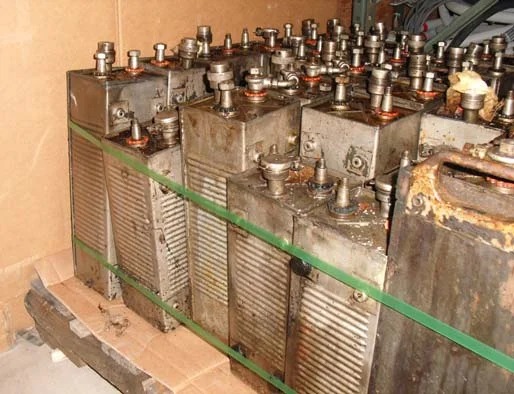
One of the most common sources of confusion for new users of alkaline technology is the difference in voltage characteristics compared to standard batteries. We are all used to the standard “12V” nomenclature, but in reality, different chemistries operate at different voltage ranges. To get the absolute best performance from your system, it is crucial to understand exactly how the voltage of the Nickel-Iron Battery behaves under charge and load.
Unlike lead-acid batteries that have a very narrow operating window, alkaline batteries operate over a much wider voltage swing. This unique trait is what allows them to be so durable, but it also requires the user to pay attention to their equipment settings. By properly configuring your charge controllers and inverters, you can unlock the full potential of this legendary technology and ensure seamless operation.
Nominal Voltage of the Nickel-Iron Battery
A single alkaline cell has a nominal voltage of 1.2 volts, compared to the 2.0 volts of a lead-acid cell. This means that to build a “12-volt” battery bank, you need 10 cells connected in series, giving you a nominal 12 volts. However, because these batteries can be charged up to higher levels, some users prefer to use 9 or 10 cells depending on their inverter’s capabilities, highlighting the flexibility of the design.
Charging Voltage for the Edison Battery
To fully saturate the electrolyte and ensure the plates remain healthy, these batteries need to be pushed to a higher voltage than you might expect. A typical charging cycle might take the bank up to 1.65 or 1.7 volts per cell, which is significantly higher than lead-acid limits. This high-voltage charging is essential for mixing the electrolyte and preventing stratification, ensuring the battery performs well for decades.
Discharge Curve of the Edison Battery
When you draw power from the bank, the voltage drops gradually and predictably, unlike the sharp cliff found in lithium discharge curves. This linear drop is actually a benefit, as it allows you to easily estimate the remaining state of charge simply by looking at a voltmeter. You never have to guess how much runtime you have left; the voltage tells you the story instantly and accurately.
Inverter Compatibility with the Nickel-Iron Battery
The most critical step in system design is ensuring your power inverter can handle the wide voltage window of alkaline chemistry. Modern high-quality inverters often have a wide DC input range that accommodates the high charging voltages and the deep discharge lows. However, cheap or older equipment might cut off too early, shutting down your power while the battery still has plenty of energy left to give.
Low Voltage Cutoff for the Nickel-Iron Battery
To utilize the full capacity of your bank, you must lower the low-voltage cutoff setting on your inverter. While a lead-acid battery is considered empty at 11.5 volts, an alkaline bank can safely be drawn down to 10 volts or even lower under load. Adjusting this single setting can essentially double your usable energy storage without adding a single extra battery to your system.
High Voltage Disconnect for the Nickel-Iron Battery
Conversely, you must check that your inverter does not trip off during a high-voltage equalization charge. If your solar panels are pushing the voltage up to 16+ volts on a 12V system to refresh the electrolyte, the inverter must remain online. Most industrial and off-grid specific inverters handle this easily, but it is a specification that must be verified before purchase to avoid nuisance tripping.
Voltage Specs for the Edison Battery
Key voltage parameters to keep in mind for system configuration.
- Cell Nominal: 1.2V per cell is the standard baseline.
- Float Charge: Typically set around 1.45V – 1.5V per cell.
- Bulk Charge: Needs to reach 1.65V – 1.7V per cell for full charge.
- Equalization: Periodic high voltage charge keeps cells balanced.
- Low Cutoff: Inverters should accept down to 1.0V or 1.1V per cell.
- Resting Voltage: Settles around 1.35V per cell after charging stops.
- Series String: 10 cells for 12V, 20 for 24V, 40 for 48V systems.
- Stability: Voltage remains stiffer under load than lead-acid.
- Monitoring: Simple voltage reading provides accurate state-of-charge data.
Conclusion on Nickel-Iron Battery Voltage
While the numbers might look different from what you are used to, managing the voltage of an alkaline system is straightforward once configured. The flexibility of the voltage range is actually a feature, not a bug, allowing for deep cycling and robust charging that cleans the plates. It is a system that rewards understanding with superior performance and incredible longevity.
By choosing the Edison Battery, you are stepping up to a professional level of energy management. With the right settings dialed in, your lights will stay on longer, your system will recover faster, and your batteries will outlive every other component in your power shed. It is the voltage of victory for the off-grid homeowner.